
What is OBT&T?
WHY OBT&T?
Up to 80% of the world’s population prefers oral communication to reading and writing.
For many cultures, oral communication is an integral part of society and a core tool for passing on history, knowledge and engaging with current events. So why not pass on God’s Word through oral means too?
Our Head of Translation Services and native Makhuwa speaker, Bonifacio Paulo, explains it this way:
In many parts of Africa, a large percentage of people are non-literate. That does not mean they are ignorant — it means they communicate and learn primarily through oral forms. Oral communication is their main way of engaging with information. When you give an oral person a written text, it can be difficult for them to fully understand it. But when that same message is communicated orally, understanding becomes much deeper.
That is why oral Bible translation is so important. In many cases, the Bible may already exist in written form, but the question is: who is actually reading it? And even among those who can read it, how much is truly understood? When the Scriptures are presented orally, using the natural communication patterns and oral features that are familiar and meaningful to the people, the message becomes far more accessible and engaging.
If you visit churches, you quickly notice that people spend a great deal of time singing. They sing because they understand and connect with the songs. In contrast, much less time is spent reading. Oral translation connects with the way people naturally communicate and learn. As a result, the Word is understood more deeply, it engages people personally, and that is where spiritual growth begins.
Unlike written translation alone, which people may read simply because there is no alternative, oral translation invites participation and connection with the Word. And when oral communities hear a story, they continue sharing it at home and within their daily lives. It becomes part of who they are. That is how spiritual growth takes place — when the Word becomes woven into the life of the community.”
OBT&T SNAPSHOT
Accessible for those who can’t read
Suits oral preference, making it easier to absorb and pass on, even for those who can read
Rigorous translation process, subject to the same standards and checks as traditional written translations
Expert consultants overseeing the process and checking translations
Internalisation process strengthens the team’s understanding of Scripture and ability to share it powerfully with others
Community testing provides essential feedback and creates early converts and adopters
Brings families and communities together to listen
Complemented by written transcriptions, subject to the same standards as traditional written translations
Holistic approach, including Scripture Engagement activities that bring Scriptural truth where it is desperately needed in the community, such as farming and trauma healing
WHAT IS THE OBT&T PROCESS?
OBT
Instead of writing down the translated Scriptures or just reading them, passages are studied and internalised by the translation team, translated, and then retold in their language style for recording and distribution. This ensures the recordings sound natural and are accepted by the community.
Where possible, respected storytellers from among the community, who are skilled at telling different types of stories like those found in the Bible, take on the role of retelling passages for recording. It is important to correspond the genre of the passage accurately so that, for example, historic stories are understood as true accounts of actual events and parables are understood as fictional stories with a moral lesson.
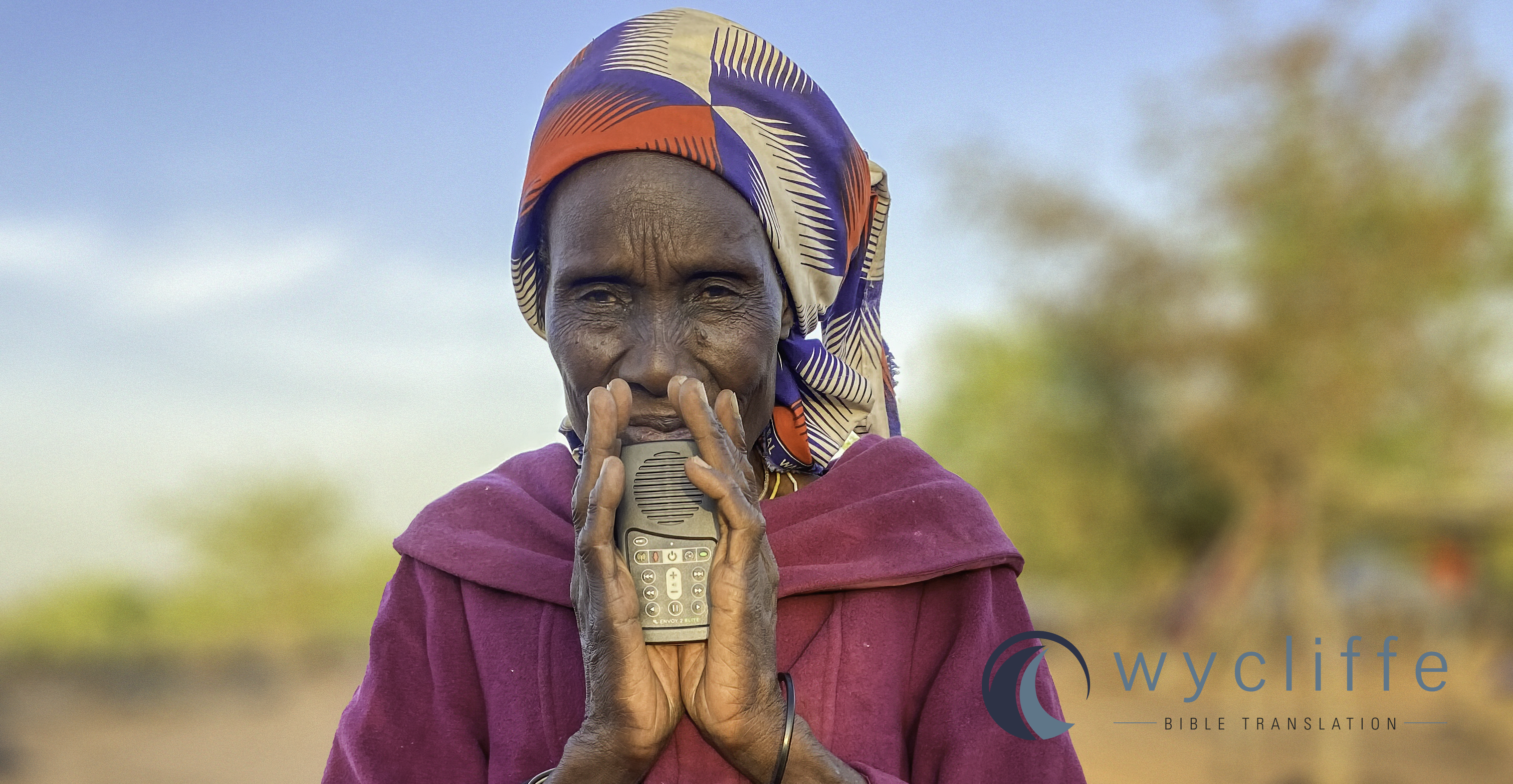
This is then loaded onto an audio device, often solar panelled, which is distributed among the churches and communities who can now hear God’s Word in the language of their heart!
Transcription
Having the written text to accompany oral recordings is also important to the communities we work with. Transcribing the oral Scriptures is a way of providing this in a way that still feels natural as it accommodates oral features of the language and doesn’t differ from the recordings.
Process Overview
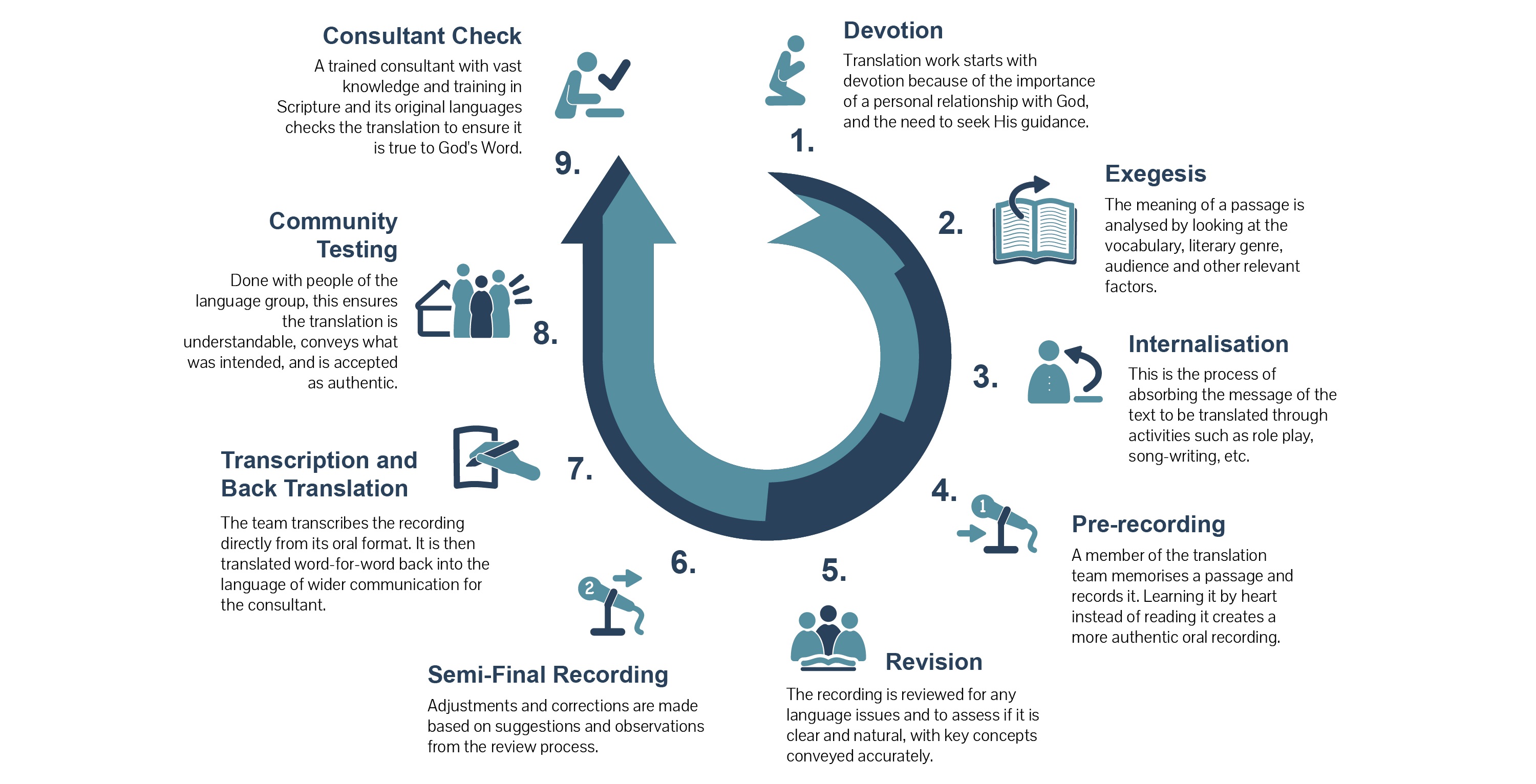
1. Devotion
Before working on Bible translation, time is set aside for devotion. Importance is place on a personal relationship with God and His Messiah, and the team are encouraged to seek God’s wisdom and direction for their personal lives, as well as listening to His guidance regarding the work He has assigned.
"The practice we have when we meet together as a team, to have daily devotions and pray together, I have brought in my own home. As a family, we now have regular Bible studies. This is strengthening our faith, as we stand firm in what God promises. The work we do has also given me a heart for my community. I am now involved in social relief initiatives to help those in need in our community" – Carlitos, Marenje Translation Team
2. Exegesis
Exegesis comes from the Greek word exēgeisthai, which means “to explain” or “to interpret.” It is the process of uncovering the meaning of the message in a text by examining factors such as vocabulary and the meaning of words, literary genre—including narrative, poetry, letters, idiomatic expressions, laws, and regulations—as well as the author, audience, and estimated date when the text was written or edited. It also considers the socio-political, economic, and religious circumstances surrounding the text.
3. Internalisation
Internalisation is a core part of Oral Bible Translation, and involves absorbing the message of the text to be translated through activities such as role play, song-writing, and other participatory methods. This both increases the personal impact and transformative power of the text, and helps the team prepare the translated text to be recorded.
Biblical examples connected to this concept include God’s instruction to Ezekiel: “Son of man, eat this scroll I am giving you… go now to the people of Israel and speak my words to them” (Ezekiel 3–4), as well as the imagery of eating the Bread of Life (John 6:35) and eating the Word of God (John 6:53).
4. Pre-recording
Pre-recording involves a member of the translation team memorising a passage and recording it from memory rather than reading it aloud. This approach creates a more authentic oral recording, with the passage being spoken naturally and by heart. A recording environment is prepared so that the team can produce a high-quality recording that meets international standards.
5. Revision
Revision involves reviewing the recording to identify any language issues and to assess whether the translation is clear, natural, and accurately conveys key concepts. This process is carried out by the reviewers together with the translation team, and includes evaluating aspects such as discourse, vocabulary, cultural appropriateness, naturalness, clarity, and the communication of key terms and concepts.
6. Semi-Final Recording
Adjustments and corrections are made based on suggestions and observations from the review process.
7. Transcription and Back Translation
Transcription and back translation involve converting the oral recording into written form and then translating it into a language of wider communication for the consultant. The translation team transcribes the recording directly from its oral format, producing a written document based on what was spoken. Transcription may be done manually by a transcriber or through mechanical means. The transcription is then back translated word-for-word into English to assist an external consultant in evaluating the translation.
8. Community Testing
Community testing is carried out with members of the language group to ensure that the translation is understandable, communicates the intended meaning, and is accepted as authentic by the community. This process includes assessing language issues as well as whether the translation sounds natural to its audience.
"We were told that Marenje community interest in the Word of God is increasing, as many who participate in community testing meetings often request to be given recorded scriptures to go listen to by themselves or with loved ones."
9. Consultant Check
The consultant check is carried out by a trained consultant with extensive knowledge of Scripture and its original languages to ensure that the translation remains true to God’s Word. The consultant will typically be involved throughout the translation process and evaluates whether the translation is natural, clear, and faithful to the source text. At the same time, it is recognised that the translation does not belong to the consultant, but to the language community.


